The Hodlssey Part 2 - Hodlysseus and the Bearclops
The Hodlssey tells the story of Hodlysseus, the ultimate Hodlr, and his journey back to Bithaca after the long Fiat wars with perils at sea and vengeful deities.
A Hero’s Journey in 6 parts
*Each part of the story is told through a unique oil painting on a hand made replica of a Roman Wax tablet
*Each Tablet comes with a hand carved stylus made of Mespilus Germánica wood and a handmade leather pouch to keep it in
*Only 6 will ever be made
THIS PIECE IS THE SECOND ONE OF THE SERIES. THE FIRST WAS SOLD.
To read the Hodlssey and catch up on Part 1, please visit this page.
Part 2 - Hodlysseus and the Bearclops
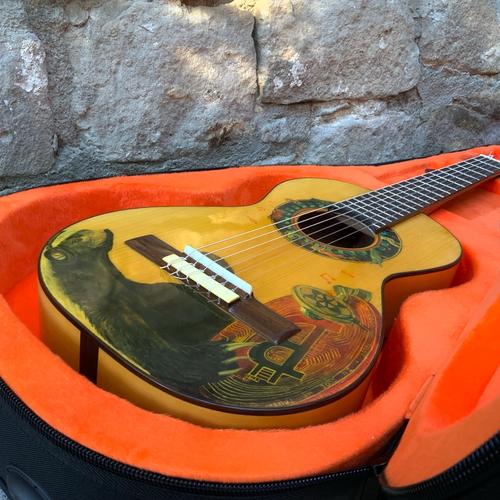
The next stop in the voyage was the island of the Bearclopes - the one-eyed giants - who lived peacefully tending their sheep. As luck would have it, though, Hodlysseus bumped into the man-eating Cyclops Bearphemos. The giant took a fancy to the travelling Bitcoiners and trapped them in his cave, swiftly eating two as an appetizer.
Seeing the gravity of the situation, Hodlysseus immediately forged a cunning plan of escape. Tempting Bearphemos with wine until the Cyclops was drunk. The hero ordered his men to turn his olive-wood staff into a spike, this they then hardened in a fire and used to blind the Bearclops while he slept. Unable to see and understandably livid at his treatment, Bearphemos tried to catch the travelling Bitcoiners by feeling his sheep as they left the cave for their grazing. Hodlysseus then instructed his men to tie themselves to the bellies of the sheep whilst he chose a ram for the purpose, and thus they escaped to continue their voyage.
However, the Bearclops cursed Hodlysseus , predicting the loss of his men, a wearisome voyage home, and disaster when he finally arrived there. Calling on the help of his father Poseidon, the god of the sea, Bearphemos ensured that it would be many a storm and ten long years before Hodlysseus reached Bithica.
Wax tablets were used in Ancient Rome as a reusable and portable writing surface. They are panels of wood, tied together, carved out and filled with pigmented bee's wax that form the writing surface. The stylus is hand carved from Mespilus Germanic wood..
Materials: Cedar of Lebanon wood (tablets), Mespilus Germanic wood (stylus), bee’s wax, coal pigment, oil paint, leather straps
Dimensions: 8.3in x 6in x 0.3in (each side)
Weight: 1 lb.
Check out the livestream as we kickoff the auction and cover early bids.
Join the Scarce City Banter Telegram channel for auction updates, commentary, and sat giveaways.